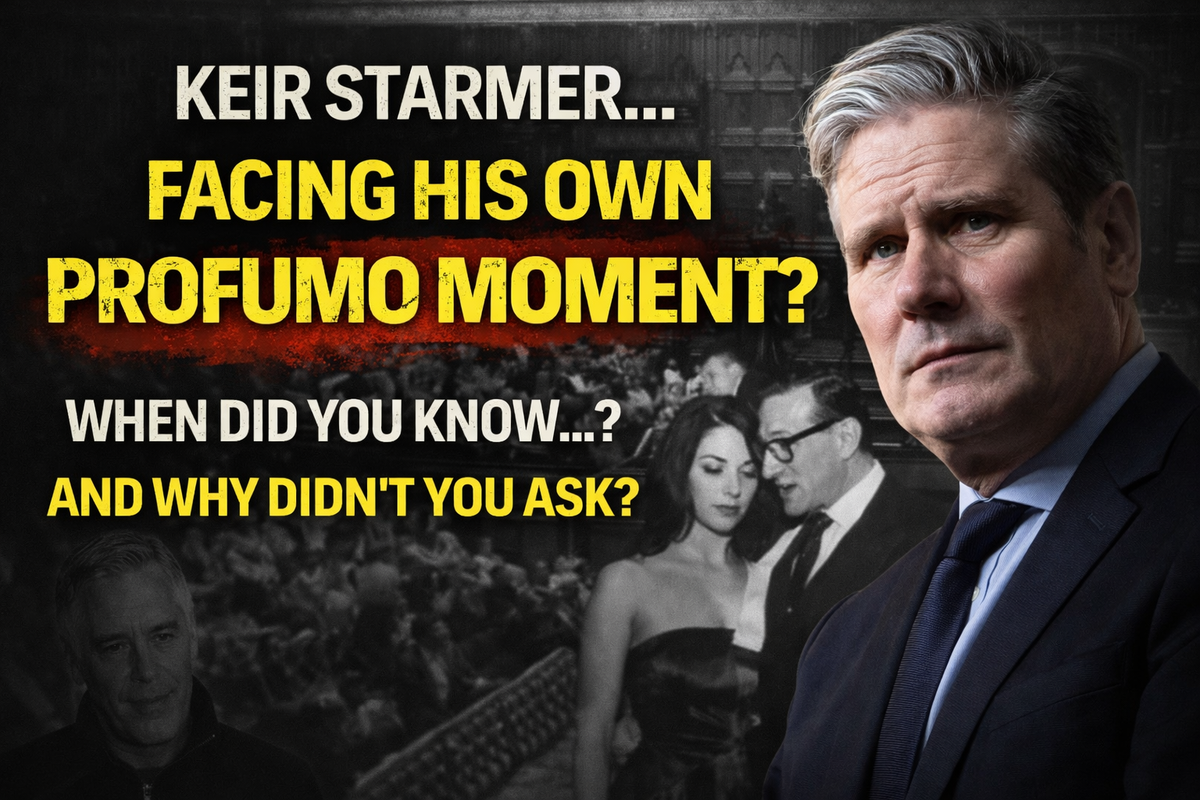
Keir Starmer May Be Facing His Own Profumo Moment
British politics has seen scandals before. Some explode loudly. Others rot quietly until the public finally notices.
Right now, Keir Starmer may be walking into the second type.
Not because he committed a crime.
But because of what he knew, what he didn’t ask, and what he chose to overlook.
And history tells us this is how political reputations collapse.
The Shadow of the Past
In 1963, the Profumo Affair destroyed a government.
At the centre were John Profumo and Christine Keeler.
The biggest issue was not just the affair.
It was the lie.
Profumo stood in Parliament and said there was nothing improper.
He was later exposed.
And his career ended instantly.
Not because of sex.
Because of dishonesty and institutional failure.
That is the pattern.
Mandelson, Epstein, and the Apology
Fast forward to today.
Starmer has now apologised to victims of Jeffrey Epstein, saying he is sorry for believing Peter Mandelson and appointing him.
He says he didn’t know the full extent of the links.
Maybe that is true.
But here is the real question.
Why didn’t he want to know?
When someone has a history connected to one of the worst abuse scandals in modern times, “I didn’t look closely” is not an excuse. It is a failure.
Leadership is not about waiting for proof to land on your desk.
It is about asking uncomfortable questions before damage is done.
This Is About Systems, Not Just People
This story is bigger than Mandelson.
Bigger than Epstein.
Bigger than one apology.
It exposes something deeper.
A political culture that protects insiders.
A system that promotes loyalty over scrutiny.
An elite circle that keeps recycling the same names.
And at the top of that system now sits Starmer.
Whether he likes it or not.
Why This Feels Like Profumo All Over Again
The Profumo scandal wasn’t just about behaviour.
It was about trust.
People felt lied to.
Dismissed.
Talked down to.
Today, many feel the same.
“I didn’t know.”
“I was misled.”
“I’m sorry.”
We have heard this script before.
And it always ends the same way.
Public confidence drains away slowly, then suddenly.
Apologies Without Consequences Mean Nothing
Let’s be honest.
If nobody loses power,
If nobody is investigated,
If nothing changes,
Then this apology is just theatre.
Victims do not need sympathy.
They need accountability.
They need transparency.
They need proof that powerful people are not above scrutiny.
The House of Lords Question No One Wants to Ask
This also raises another issue we avoid.
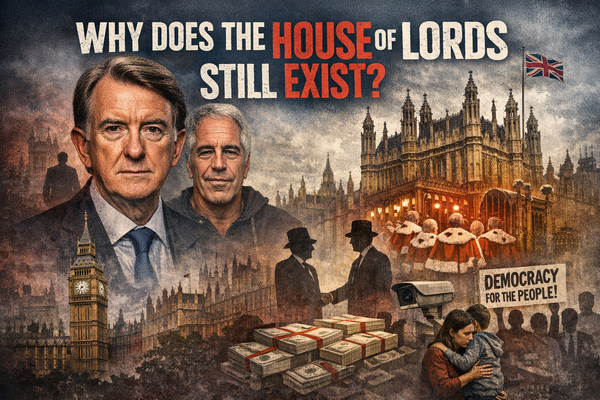
Why do unelected figures with questionable histories still wield influence through the House of Lords?
Why does this system keep giving second chances to people the public never voted for?
Why is reputation recycled instead of earned?
Until this is confronted, scandals will keep repeating.
Starmer’s Real Test Has Just Begun
This is not yet a resignation moment.
But it is a credibility moment.
Starmer now faces a choice.
He can treat this as a PR problem.
Or he can treat it as a moral reckoning.
One path leads to short term survival.
The other leads to long term trust.
Only one of them prevents a Profumo style collapse.
My View
I don’t think Starmer is corrupt.
I think he is cautious.
Too cautious.
So cautious that he trusts systems that no longer deserve trust.
And that is dangerous.
Because history shows us that leaders don’t fall when they are evil.
They fall when they are complacent.
Final Thought
The Profumo scandal taught Britain one lesson:
It’s not the mistake that ends you.
It’s the cover up.
It’s the silence.
It’s the failure to act early.
Starmer has been given a warning shot.
If he ignores it, this will not be remembered as an apology.
It will be remembered as the beginning.